Fire Assay
Fire assaying has been practiced since ancient times and has proven very reliable in the determination of precious metals. The procedure follows the main steps of weighing, fluxing, fusing, pouring, cupellation and parting.
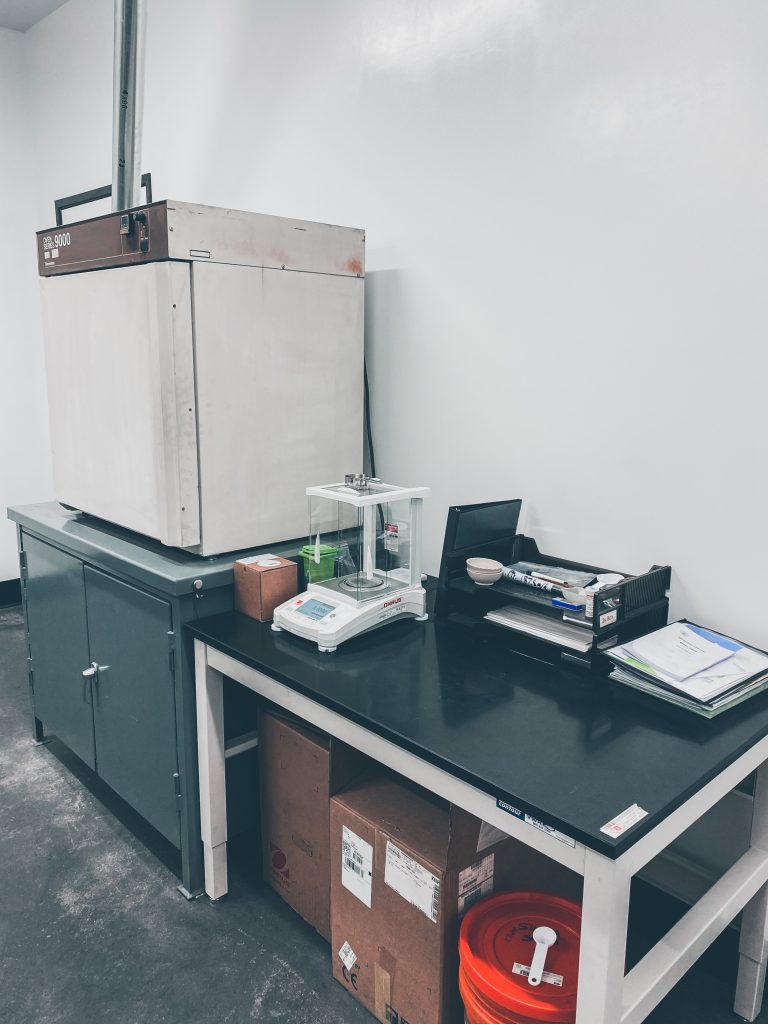
Our laboratory has taken great care to set up a structure that allows these steps to proceed in an orderly fashion. The result is superior accuracy, and more settlements reached without umpire.
Hazardous Materials Monitoring
The laboratory uses amperometric and mass spectrometric analysis to assess the presence and concentration of potentially hazardous materials such as cyanide and mercury within mining by-products, supporting a safe work environment and ethical waste management.
Analysts take mercury vapor samples at random and every reading is recorded and filed. If excessive levels are detected, processing is halted for the safety of employees. On occasion the monitor records a spike; this has been proven to relate to elevated temperatures around processing equipment rather than elevated mercury.
Instrumentation
- AAAtomic absorption spectroscopy — quantitative determination of chemical elements by absorption of optical radiation by free atoms in the gaseous state
- ICP-OES / ICP-AESInductively coupled plasma atomic emission spectroscopy. Two machines on site to increase volume
- XRFX-ray fluorescence spectroscopy — a broad read on a sample’s properties in minutes, and a good indicator of what to expect from the fire assay